
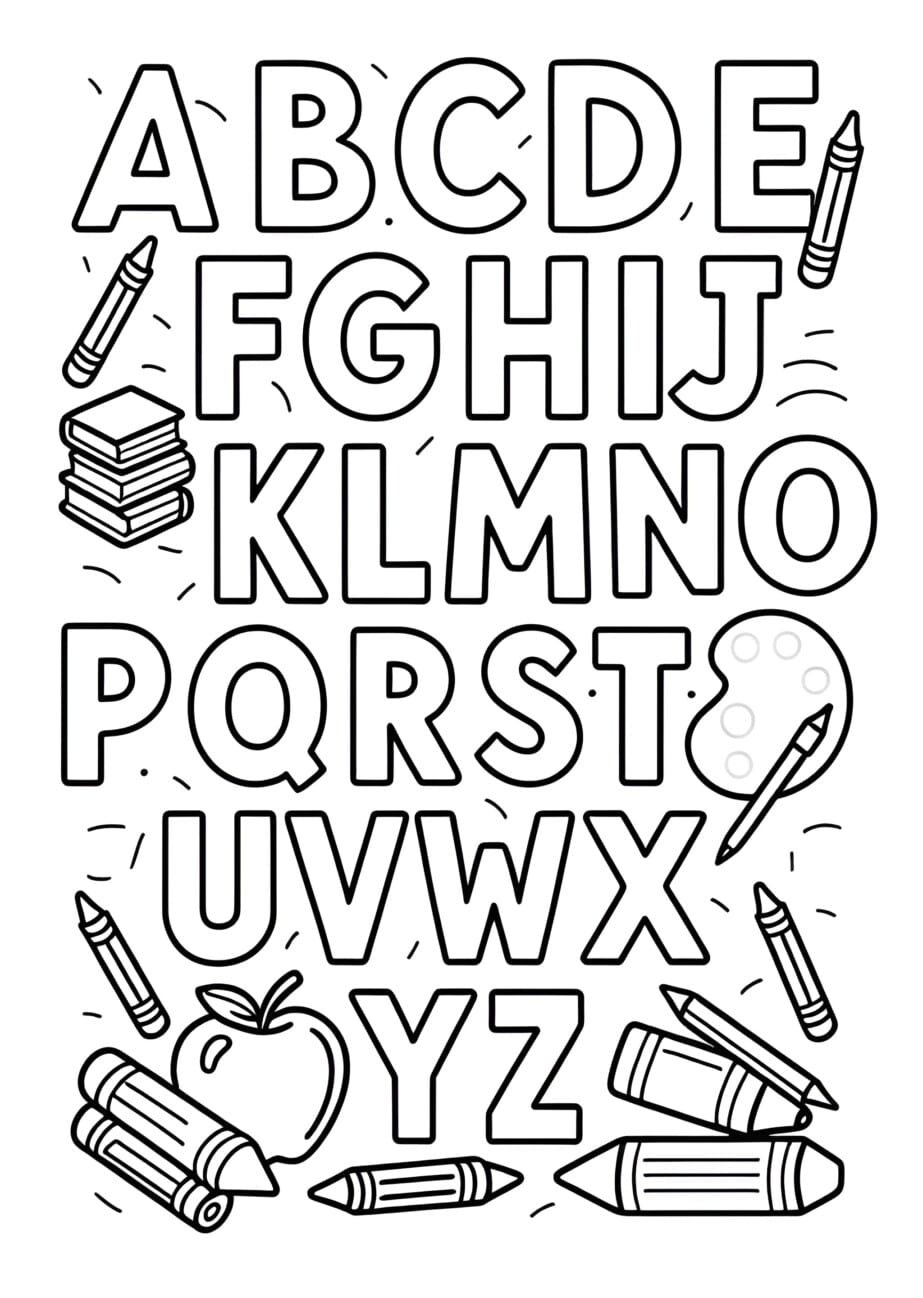
Using Pictures Of The Alphabet To Color is an excellent way to make learning the alphabet engaging and fun for young children. If you are a teacher in a classroom setting or a parent homeschooling at home, these coloring pages serve as valuable tools to enhance literacy skills while allowing for creative expression. In this guide, we will explore how to effectively utilize these resources, the benefits they provide, and practical tips for implementation.
Understanding the Resource
Pictures Of The Alphabet To Color typically feature each letter of the alphabet alongside corresponding images that begin with that letter. For example, the letter “A” may be paired with an apple, while “B” could feature a balloon. This not only aids in letter recognition but also helps children associate letters with sounds and words.
Age Appropriateness
These coloring pages are suitable for preschool and early elementary students, generally ages 3 to 7. They cater to various learning styles and can be adapted for different skill levels, making them a versatile choice for educators and parents alike.
Benefits of Coloring the Alphabet
Incorporating coloring activities into learning has several benefits beyond just fun. Here are some key advantages:
- Fine Motor Skills Development: Coloring helps children develop their hand-eye coordination and fine motor skills, which are essential for writing.
- Creative Expression: Children can express themselves through color choices and designs, fostering creativity and individuality.
- Focus and Concentration: Engaging in coloring requires focus, helping to enhance attention spans and concentration.
- Letter Recognition: By repeatedly coloring each letter, children reinforce their recognition and recall of the alphabet.
How to Implement in the Classroom
When using Pictures Of The Alphabet To Color in a classroom setting, consider the following steps to maximize their effectiveness:
Step 1: Print in Bulk
For classroom use, printing these resources in bulk can save time and ensure all students have access. You might choose to print on standard letter-size paper (8.5” x 11”) for easy handling.
Step 2: Set Up Stations
Create coloring stations where students can choose their favorite letters to color. This allows for a more organized and engaging environment. Each station could feature a different letter along with the associated picture.
Step 3: Incorporate Group Activities
Encourage collaborative learning by having students work in pairs or small groups. They can discuss the images they are coloring, share their thoughts on the letters, or even come up with words that start with each letter.
Step 4: Display Completed Work
Create a “Wall of Letters” in your classroom where students can showcase their colored pictures. This not only boosts their confidence but also creates a visual learning environment.
Home Use Ideas
For parents looking to use Pictures Of The Alphabet To Color at home, here are a few practical tips:
Create a Learning Routine
Incorporate coloring into your daily routine. Perhaps set aside a specific time each day dedicated to coloring activities. This helps establish a habit and creates anticipation for learning.
Use as Reinforcement
After teaching letters through songs or stories, use the coloring pages as reinforcement. Ask your child to color a letter that you’ve just covered, allowing them to practice recognition and recall.
Combine With Other Activities
Integrate the coloring activity with other learning methods. For instance, after coloring, you can ask your child to identify words that start with the letter they just colored. This can reinforce their learning and make it more interactive.
Tips for Effective Use
To ensure you get the most out of your Pictures Of The Alphabet To Color, keep these tips in mind:
- Use Quality Paper: If you want to use markers, consider using cardstock instead of regular printer paper. This prevents bleed-through and allows for more vibrant colors.
- Consider Laminating: For repeated use, you might laminate the coloring pages. This way, children can use dry-erase markers to color and wipe off for another round.
- Print in Color: If possible, print the pages in color to provide a better visual reference for children. It helps them see the connection between the letter and its corresponding image.