
Understanding the New Deal and its various Alphabet Agencies can be a complex task for students. The New Deal Worksheet Alphabet Agencies Dig Answers resource provides a structured way for learners to explore this significant period in American history. This worksheet is designed to enhance comprehension and retention through engaging activities that prompt critical thinking.
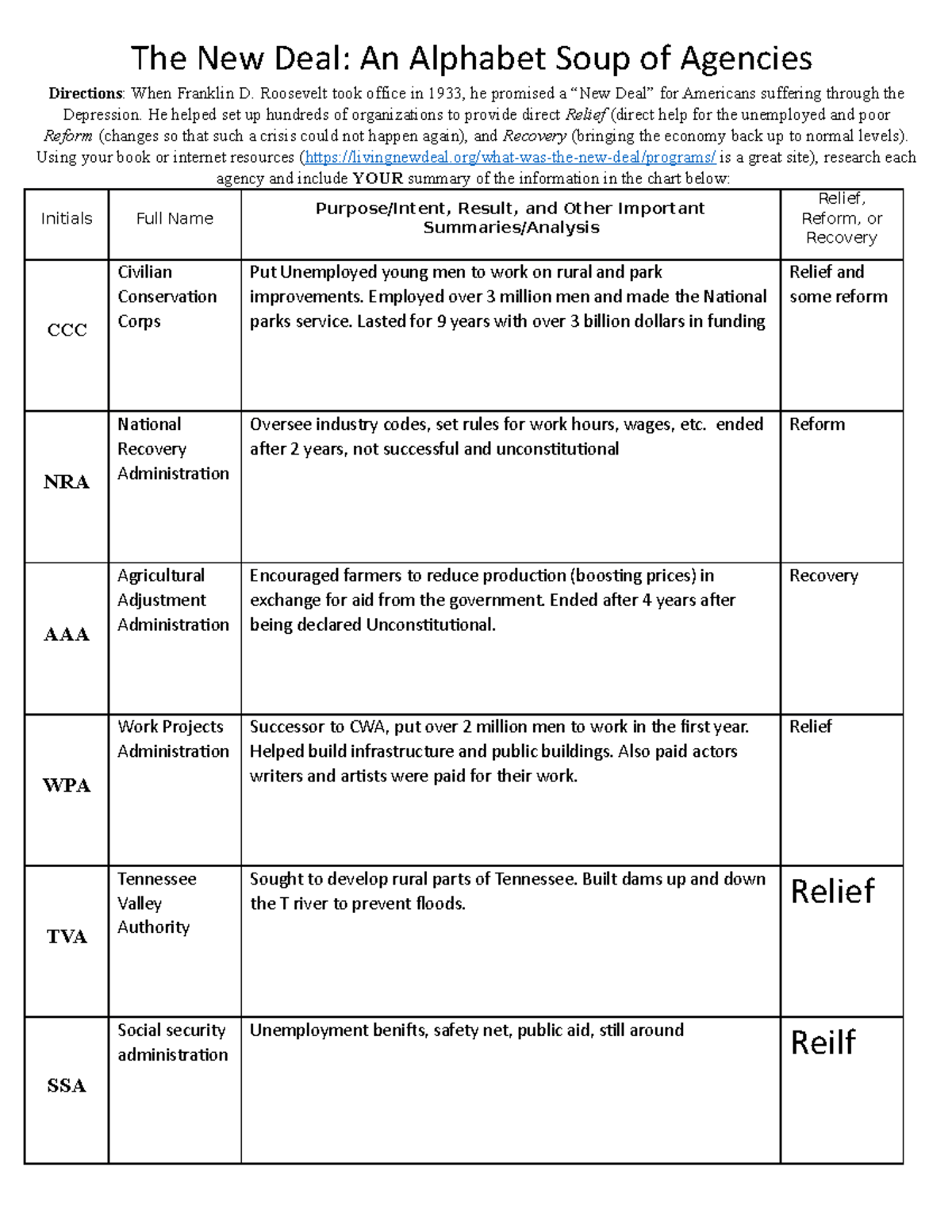
What is the New Deal Worksheet Alphabet Agencies Dig Answers?
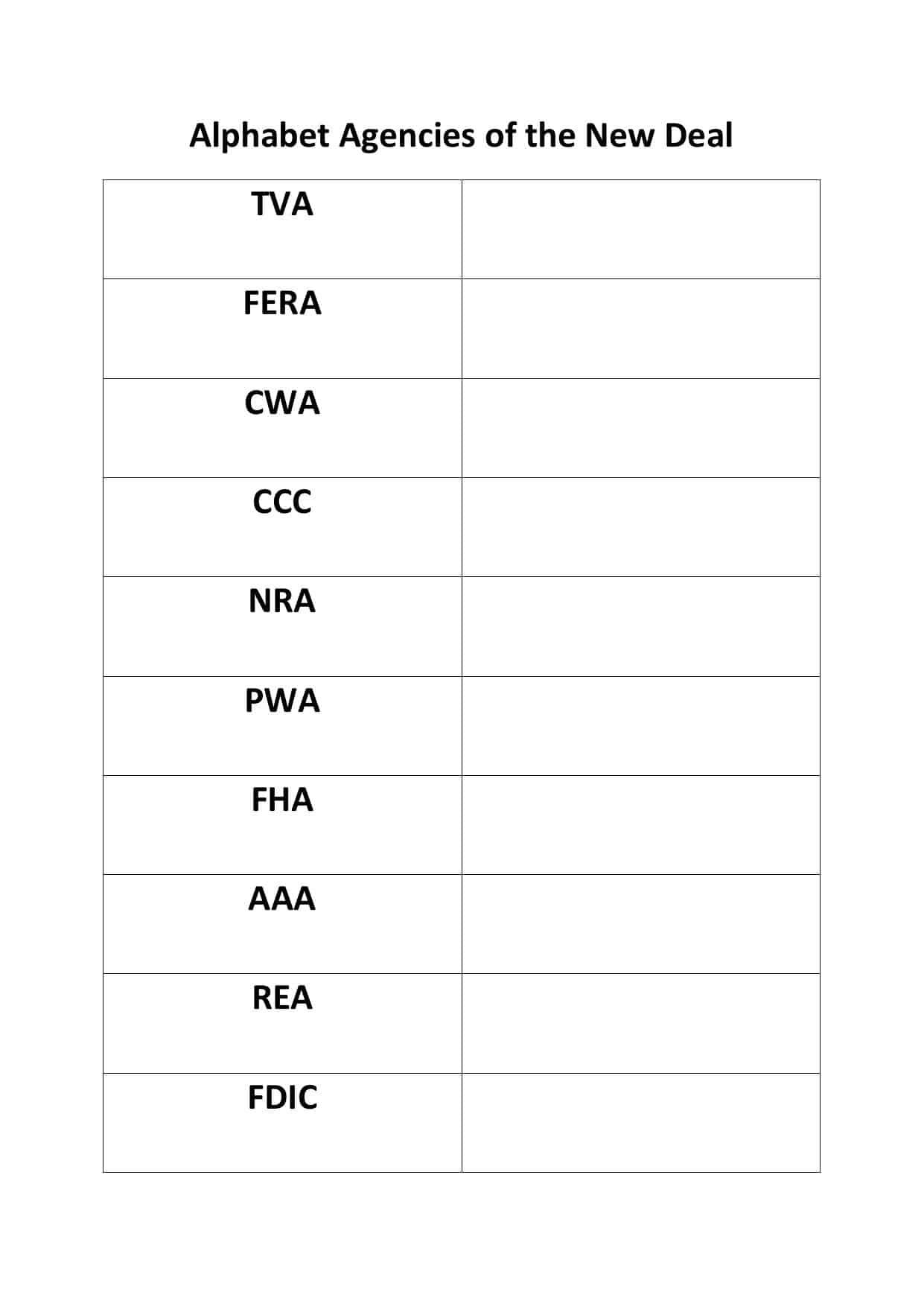
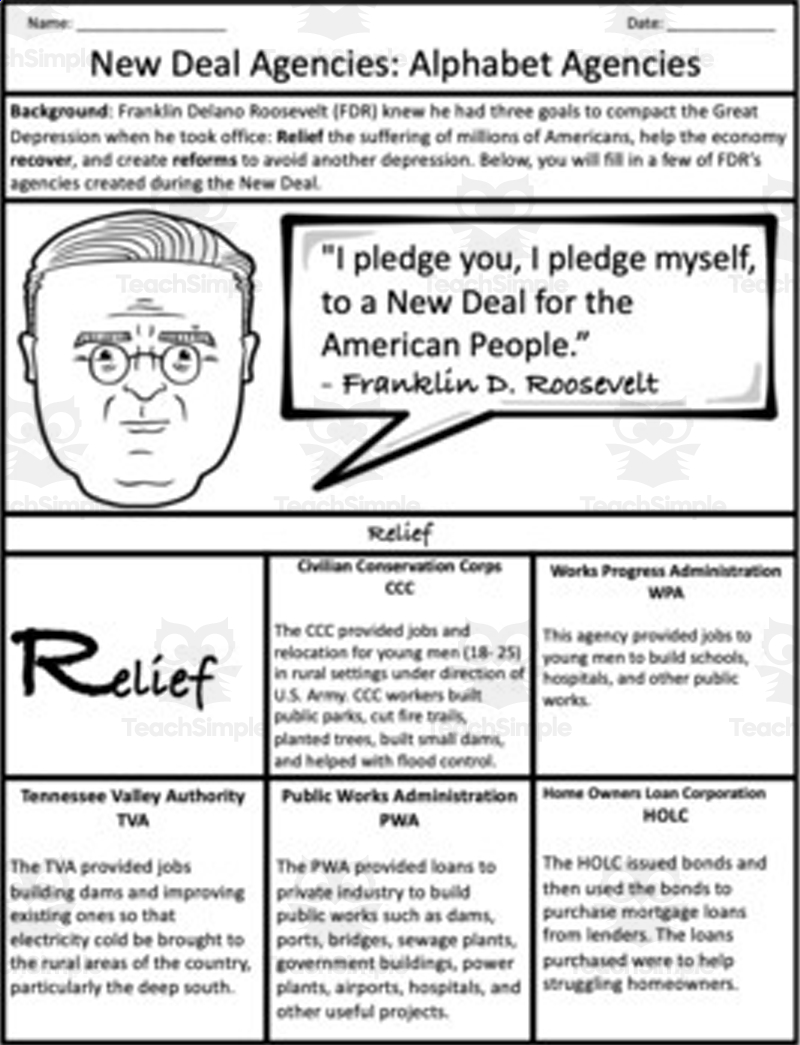
This worksheet focuses on the Alphabet Agencies created during the New Deal, which was a series of programs and policies implemented by President Franklin D. Roosevelt in response to the Great Depression. The New Deal aimed to provide relief for the unemployed, recovery of the economy, and reform of the financial system. The worksheet invites students to research and fill in information about various agencies, such as the Civilian Conservation Corps (CCC), the Works Progress Administration (WPA), and the National Recovery Administration (NRA).
Key Features of the Worksheet
The New Deal Worksheet Alphabet Agencies Dig Answers includes several important features:
- Structured Activities: The worksheet includes fill-in-the-blank sections, multiple-choice questions, and short answer prompts. These are designed to encourage students to think critically about each agency’s purpose and impact.
- Age Appropriateness: This resource is suitable for middle school to high school students, making it versatile for different grade levels within social studies or history classes.
- Printable Format: The worksheet is available in a PDF format, ensuring easy access for teachers and students. This allows for straightforward printing and distribution in a classroom or homeschool setting.
How to Use the Worksheet Effectively
To maximize the educational benefit of the New Deal Worksheet Alphabet Agencies Dig Answers, consider the following practical tips:
- Spread Activities Over Multiple Days: Instead of having students complete the entire worksheet in one sitting, break it into sections. For instance, assign one or two agencies per day, allowing students to dive deeper into research and discussion. This repetition helps reinforce learning and retention.
- Incorporate Group Discussions: After students complete sections of the worksheet, hold group discussions to review their findings. This not only fosters collaboration but also allows students to share insights and learn from one another.
- Utilize Additional Resources: Encourage students to explore additional resources, such as online databases, historical texts, or documentaries related to the New Deal. This not only enriches their understanding but also cultivates research skills.
- Assessment and Feedback: After completing the worksheet, consider creating a short quiz or a class presentation where students can demonstrate their understanding of the Alphabet Agencies. Providing feedback on their worksheets will help them identify areas for improvement.
Benefits of Using the New Deal Worksheet
Using the New Deal Worksheet Alphabet Agencies Dig Answers offers several benefits:
- Enhanced Engagement: The interactive nature of the worksheet keeps students engaged, as they actively participate in their learning process.
- Improved Critical Thinking Skills: By analyzing the functions and impacts of different agencies, students develop critical thinking skills that are essential for historical analysis.
- Clear Learning Objectives: The worksheet aligns with common core standards for history and social studies, ensuring that students meet educational benchmarks while exploring important historical content.
Tips for Downloading and Printing
When downloading the New Deal Worksheet Alphabet Agencies Dig Answers, keep these practical tips in mind:
- Check Printer Settings: Ensure your printer settings are adjusted to print in portrait mode, as this layout typically works best for worksheets.
- Select the Right Paper Type: If possible, use cardstock for durability, especially if the worksheet will be handled frequently. This can help prevent wear and tear.
- Preview Before Printing: Always preview the document before printing to ensure that all elements are correctly formatted and visible. This step can help avoid wasted paper and ink.