
The New Deal Alphabet Agencies Worksheet is a valuable educational tool that helps students understand the various agencies created during the New Deal era. These agencies were crucial in providing relief, recovery, and reform during the Great Depression. This worksheet is designed to engage students and facilitate their learning about the historical significance of these agencies.
Understanding the New Deal Alphabet Agencies
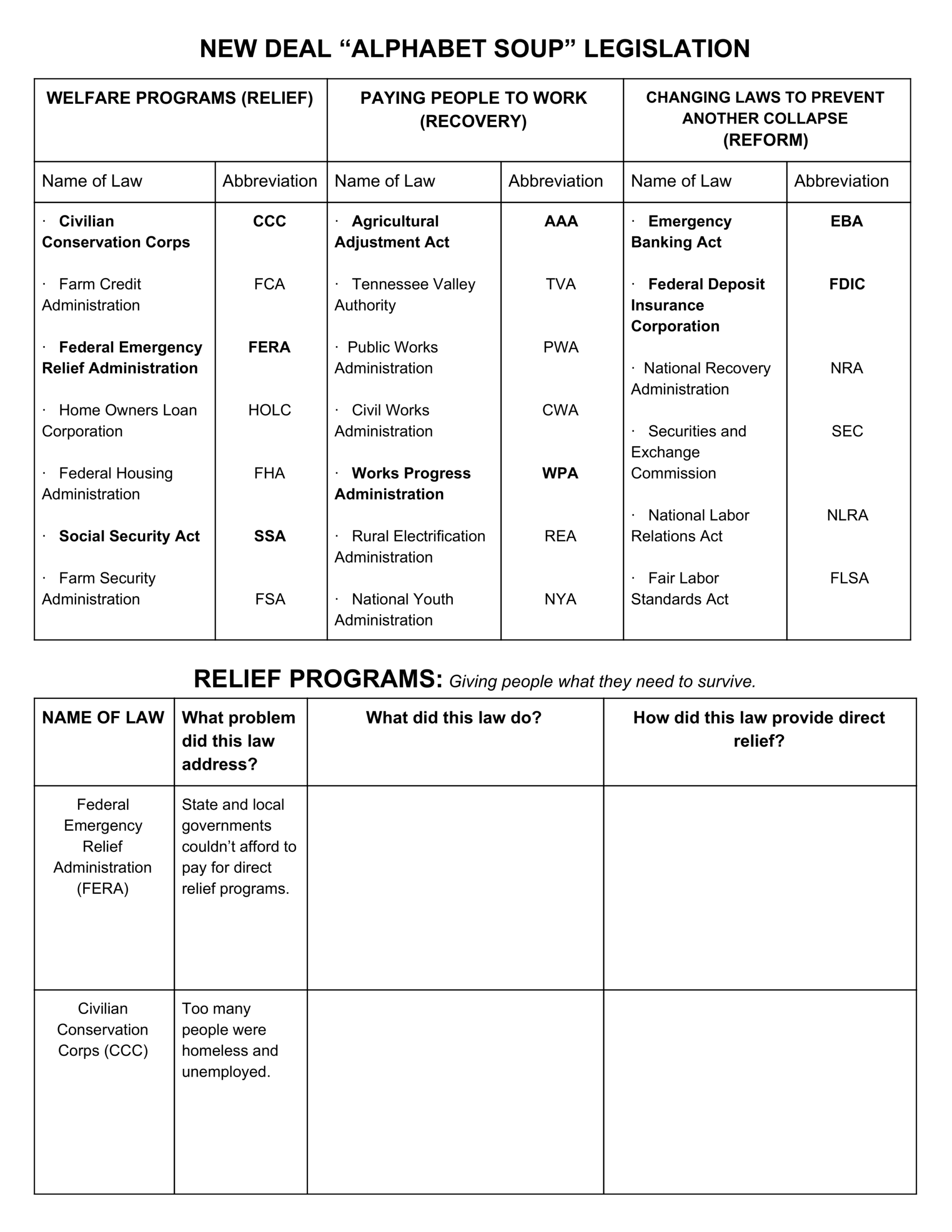
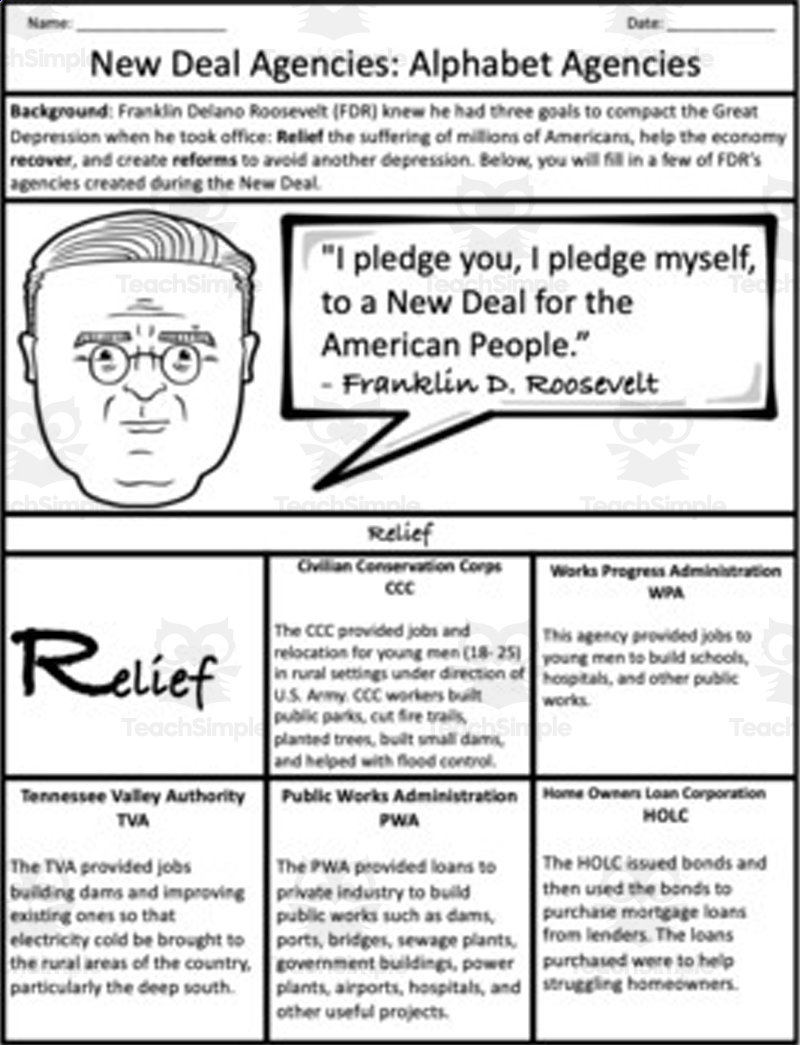
The New Deal, introduced by President Franklin D. Roosevelt in the 1930s, aimed to address the economic turmoil caused by the Great Depression. Several agencies, often referred to as “Alphabet Agencies” due to their acronyms, were established to provide jobs, support, and relief to millions of Americans. Some of the key agencies include:
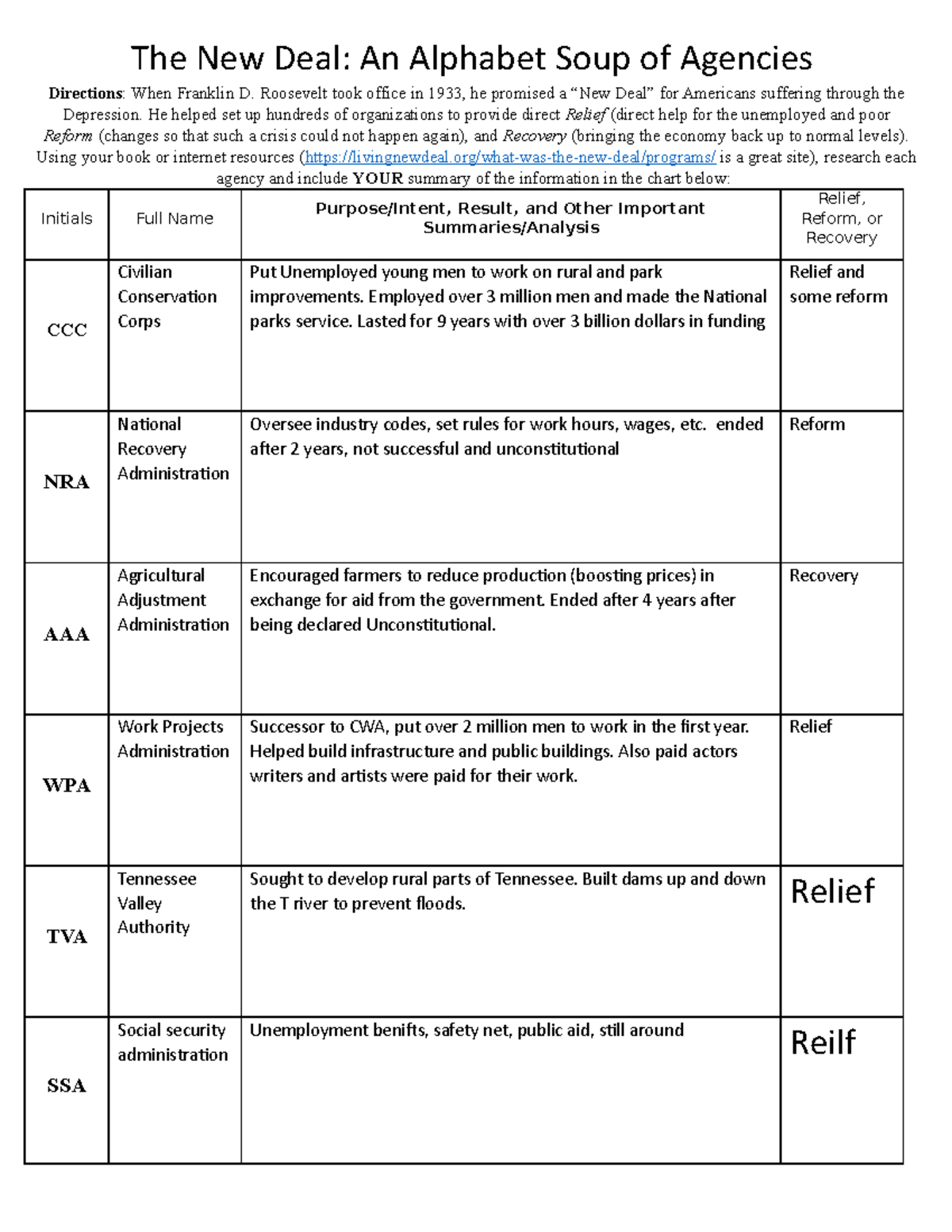
- CCC (Civilian Conservation Corps): Focused on environmental conservation and employed young men.
- PWA (Public Works Administration): Funded large-scale public works projects to create jobs.
- WPA (Works Progress Administration): Provided jobs in various sectors, including arts and construction.
- FDIC (Federal Deposit Insurance Corporation): Insured bank deposits to restore trust in the banking system.
The New Deal Alphabet Agencies Worksheet aids in breaking down these agencies, helping students grasp their purposes and impacts on American society.
Key Features of the New Deal Alphabet Agencies Worksheet
When selecting the New Deal Alphabet Agencies Worksheet, consider the following features that enhance its effectiveness for classroom or homeschool use:
- Clear Layout: A well-organized worksheet helps students navigate the information easily. Sections for agency names, functions, and historical significance should be clearly delineated.
- Age Appropriateness: Ensure the worksheet is suitable for the intended grade level, typically 5th to 8th grade. The complexity of the language and concepts should match the students’ understanding.
- Printable Format: Opt for a PDF version that maintains formatting when printed. This avoids issues with resizing or alignment that can occur with image files.
- Engagement Activities: Worksheets that include interactive elements, such as matching, fill-in-the-blanks, or short answer questions, encourage active learning.
By focusing on these features, educators can choose a worksheet that best suits their instructional needs and enhances student engagement.
Using the Worksheet Effectively
To maximize the benefits of the New Deal Alphabet Agencies Worksheet, consider integrating it into a broader lesson plan. Here are some practical strategies:
- Introduce the Topic: Begin with a brief overview of the Great Depression and the need for the New Deal. This sets the context for the worksheet.
- Distribute the Worksheet: Hand out the worksheet during a dedicated history lesson. Ensure students have the necessary materials, such as pens or colored pencils.
- Incorporate Group Work: Encourage students to work in pairs or small groups. This fosters collaboration and discussion about the agencies and their impacts.
- Reinforce Learning: Use the worksheet as a springboard for further activities, such as creating presentations on specific agencies or discussing their long-term effects on American society.
Consistent practice with the worksheet over a week can reinforce learning. For instance, assign different agencies each day, allowing students to delve deeper into their functions and historical contexts.
Assessment and Feedback
Assessment is a crucial component of using the New Deal Alphabet Agencies Worksheet. Here’s how to approach it:
- Review Answers: Go through the completed worksheets with the class to clarify any misunderstandings. This can be done through a group discussion or a quick quiz.
- Provide Constructive Feedback: Offer specific comments on students’ grasp of the material. Highlight areas where they excelled and where they might need further clarification.
- Follow-Up Activities: After assessing the worksheets, consider additional projects or essays where students can explore the implications of the New Deal agencies further.
Using assessment effectively not only helps gauge student understanding but also reinforces the lessons learned through the worksheet.
Additional Resources for Teaching About the New Deal
Incorporating the New Deal Alphabet Agencies Worksheet can be enhanced by utilizing other educational resources. Here are some suggestions:
- Documentaries and Videos: Visual materials can provide context and bring the historical period to life. Look for documentaries focused on the Great Depression and the New Deal.
- Books and Articles: Providing students with age-appropriate reading materials about the New Deal can deepen their understanding. Consider using excerpts from historical texts or biographies of key figures like FDR.
- Field Trips: If possible, plan visits to local museums or historical sites that feature exhibits on the Great Depression or the New Deal. This experiential learning can make the history more relatable.
Utilizing a variety of resources will enrich the learning experience and help students make connections between the past and present.
The New Deal Alphabet Agencies Worksheet offers a structured, engaging way for students to learn about this pivotal period in American history. By selecting the right worksheet and implementing effective teaching strategies, educators can foster a deeper understanding of how these agencies shaped the nation.
For immediate application, print out the worksheet and plan to introduce it in the next history lesson, ensuring students gain both knowledge and insight into the New Deal’s legacy.