
The Fruit And Vegetable Alphabet Worksheet is designed to help young learners connect letters with healthy food choices. This resource, typically formatted as an 8.5” x 11” printable PDF, features a visually engaging layout that encourages children to explore both the alphabet and nutrition in an interactive way. You can easily print it at home or in the classroom, making it an ideal choice for teachers and parents alike.
Understanding the Layout of the Worksheet
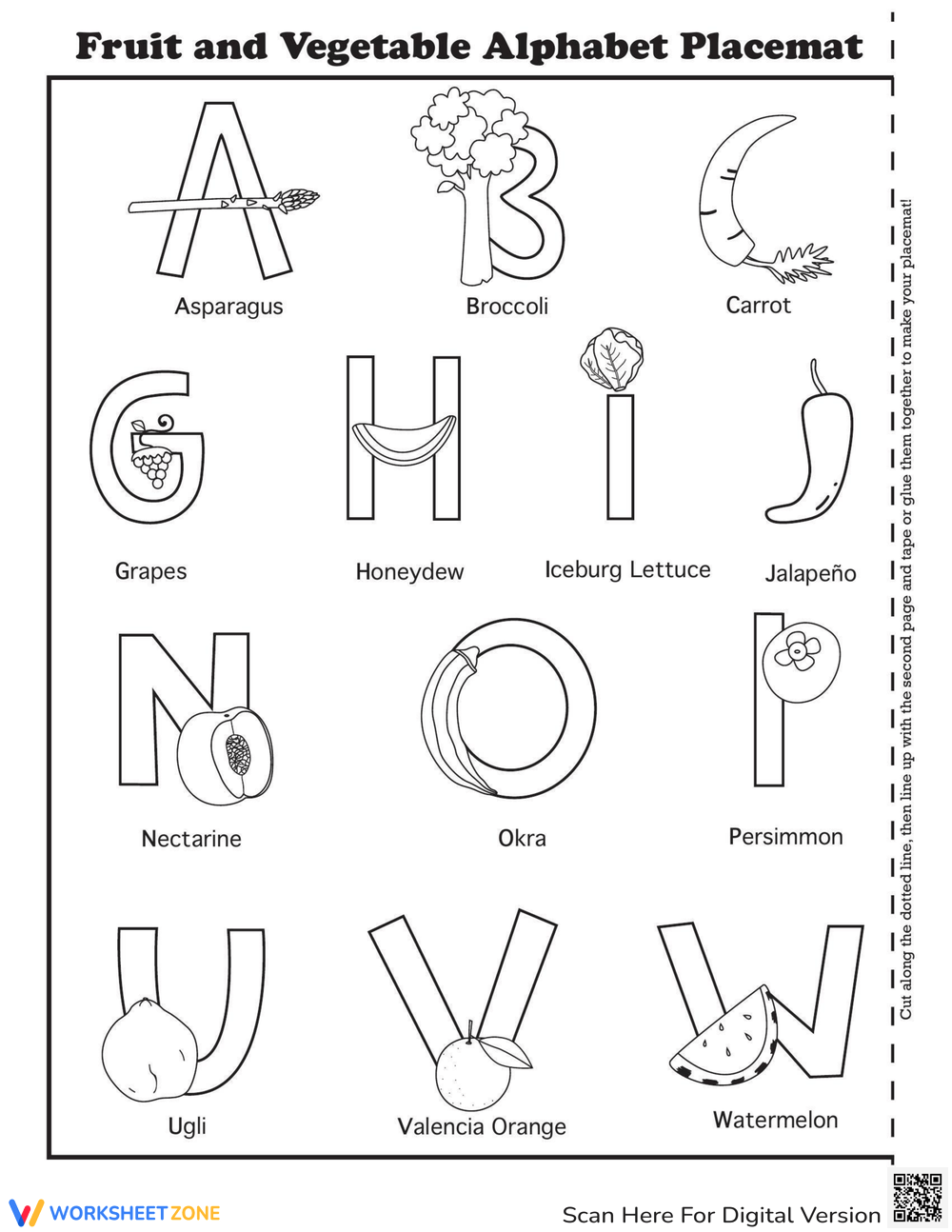
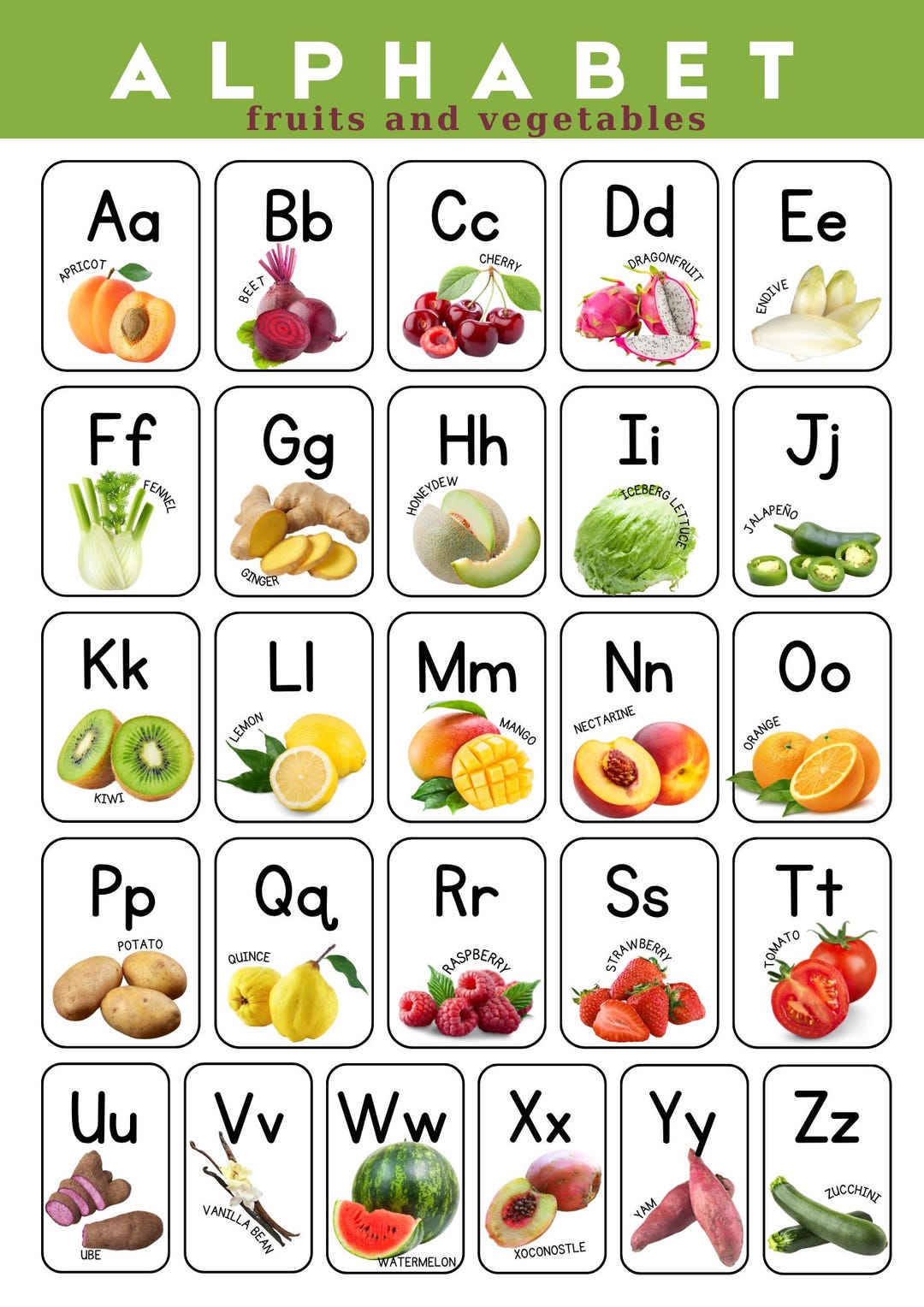
The layout of the Fruit And Vegetable Alphabet Worksheet is intuitive and user-friendly. Each letter of the alphabet corresponds to a fruit or vegetable, providing a clear visual cue for children. For example, “A” might represent “Apple,” while “B” stands for “Banana.” This straightforward design allows children to focus on letter recognition and phonetics while learning about healthy eating.
Additionally, the worksheet typically includes colorful illustrations or images of the fruits and vegetables next to their corresponding letters. This visual element not only captures children’s attention but also aids memory retention. When children can visualize the item associated with each letter, they are more likely to remember it.
Age Suitability and Educational Objectives
This worksheet is primarily suitable for preschool and early elementary students, typically ages 4 to 7. It aligns well with early literacy goals, making it a practical tool for teachers aiming to enhance letter recognition and vocabulary.
The educational objectives of the Fruit And Vegetable Alphabet Worksheet include:
- Letter Recognition: Children will identify and name letters.
- Vocabulary Building: Kids will learn the names of various fruits and vegetables.
- Nutritional Awareness: The worksheet introduces healthy food options, promoting better eating habits.
By integrating these learning objectives, the worksheet serves multiple educational purposes, making it a valuable addition to any curriculum.
Practical Uses in the Classroom or Home
You can incorporate the Fruit And Vegetable Alphabet Worksheet into daily lessons or activities in various ways:
- Independent Practice: Students can complete the worksheet on their own after a brief introduction to the letters and corresponding foods. This encourages self-directed learning and reinforces their understanding.
- Group Activities: Use the worksheet as a basis for group discussions. After filling it out, children can share their favorite fruits and vegetables, fostering communication skills and teamwork.
- Arts and Crafts: Combine the worksheet with art projects. For example, students could color the illustrations or create a collage of real fruits and vegetables, enhancing the sensory experience of the lesson.
These practical uses ensure that the worksheet is not just a one-time activity but can be revisited throughout the school year.
Printing Tips for Optimal Use
When preparing to print the Fruit And Vegetable Alphabet Worksheet, consider the following tips to ensure the best results:
- Paper Choice: For durability, use cardstock instead of regular printer paper. Cardstock holds up better, especially if students will be using colored pencils or markers.
- Print Settings: If possible, use a color printer to capture the vibrant colors of the illustrations. This makes the worksheet more engaging for children.
- Portrait vs. Landscape: The worksheet is typically designed for portrait layout, which works best for most home printers. Make sure to select the correct orientation in your print settings.
By following these printing tips, you’ll create a resource that is not only visually appealing but also sturdy enough for multiple uses.
Enhancing the Learning Experience
To further enrich the learning experience, consider pairing the worksheet with additional activities:
- Cooking Class: Organize a simple cooking session where kids can prepare a dish using one or more of the fruits and vegetables featured on the worksheet. This hands-on approach reinforces their learning through practical application.
- Field Trips: Plan a visit to a local farmer’s market or grocery store. Allow children to see, touch, and taste the fruits and vegetables they’ve learned about. This real-world connection solidifies their understanding and appreciation of healthy foods.
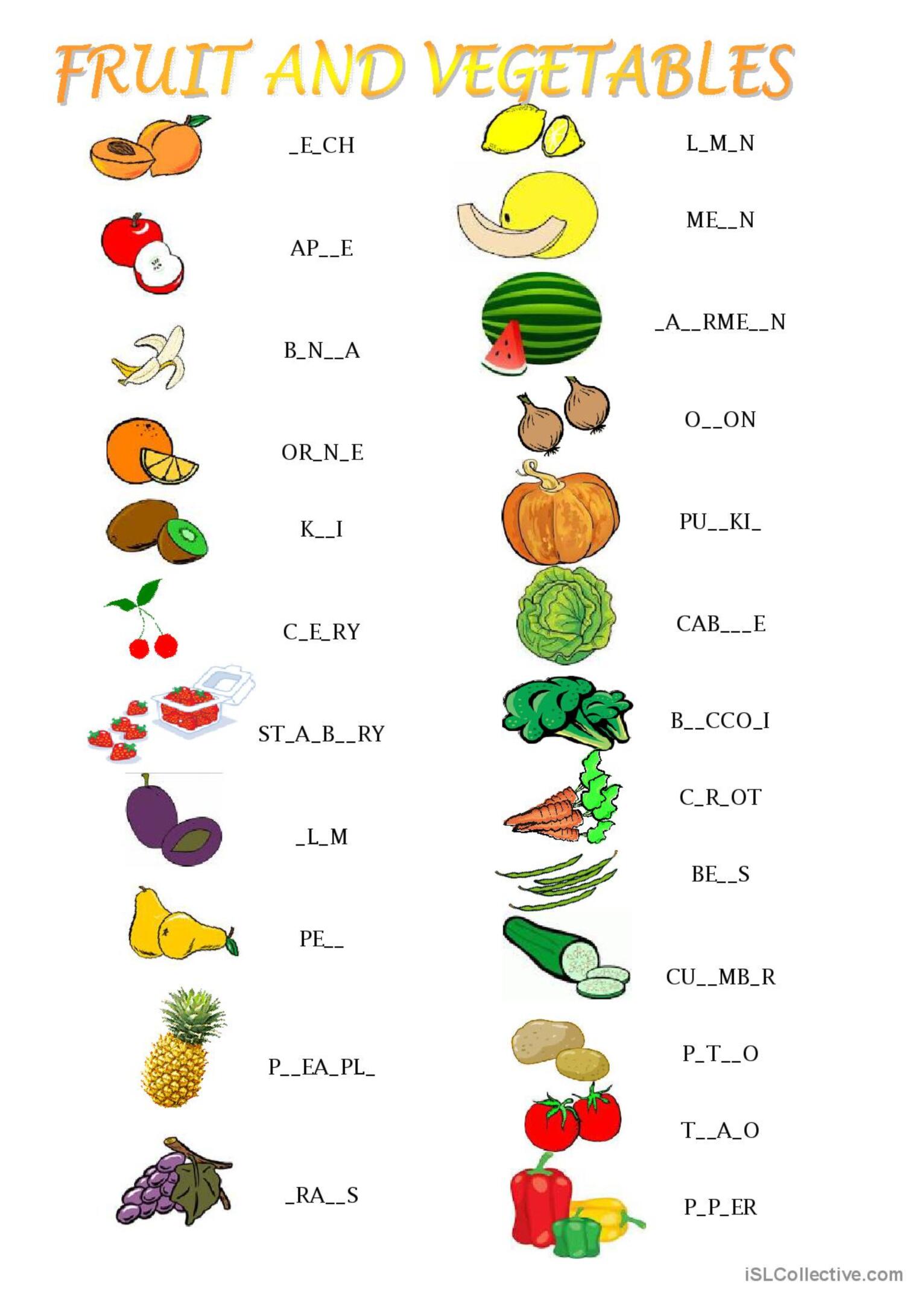
- Interactive Games: Create games that involve matching letters with pictures of fruits and vegetables or organizing them alphabetically. This can be done using flashcards or digital apps to make learning fun and interactive.
These suggestions not only enhance the worksheet’s educational value but also make learning about the alphabet and healthy eating enjoyable.
Downloading and Accessing the Resource
To access the Fruit And Vegetable Alphabet Worksheet, you can typically find it on educational resource websites. Look for downloadable PDFs that are easy to print. Ensure that you have the necessary software to open and print the file, such as Adobe Acrobat Reader.
When searching for this resource, consider variations in keywords like “alphabet worksheets” or “fruit and vegetable activities” to broaden your options. This can help you find additional materials that complement the worksheet and expand on the themes of nutrition and literacy.
By utilizing the Fruit And Vegetable Alphabet Worksheet effectively, you can create a rich learning environment that supports young children in both literacy and healthy eating habits. Whether in a classroom or at home, this resource offers a fun and educational way for kids to learn about the alphabet and the importance of fruits and vegetables in their diet.