
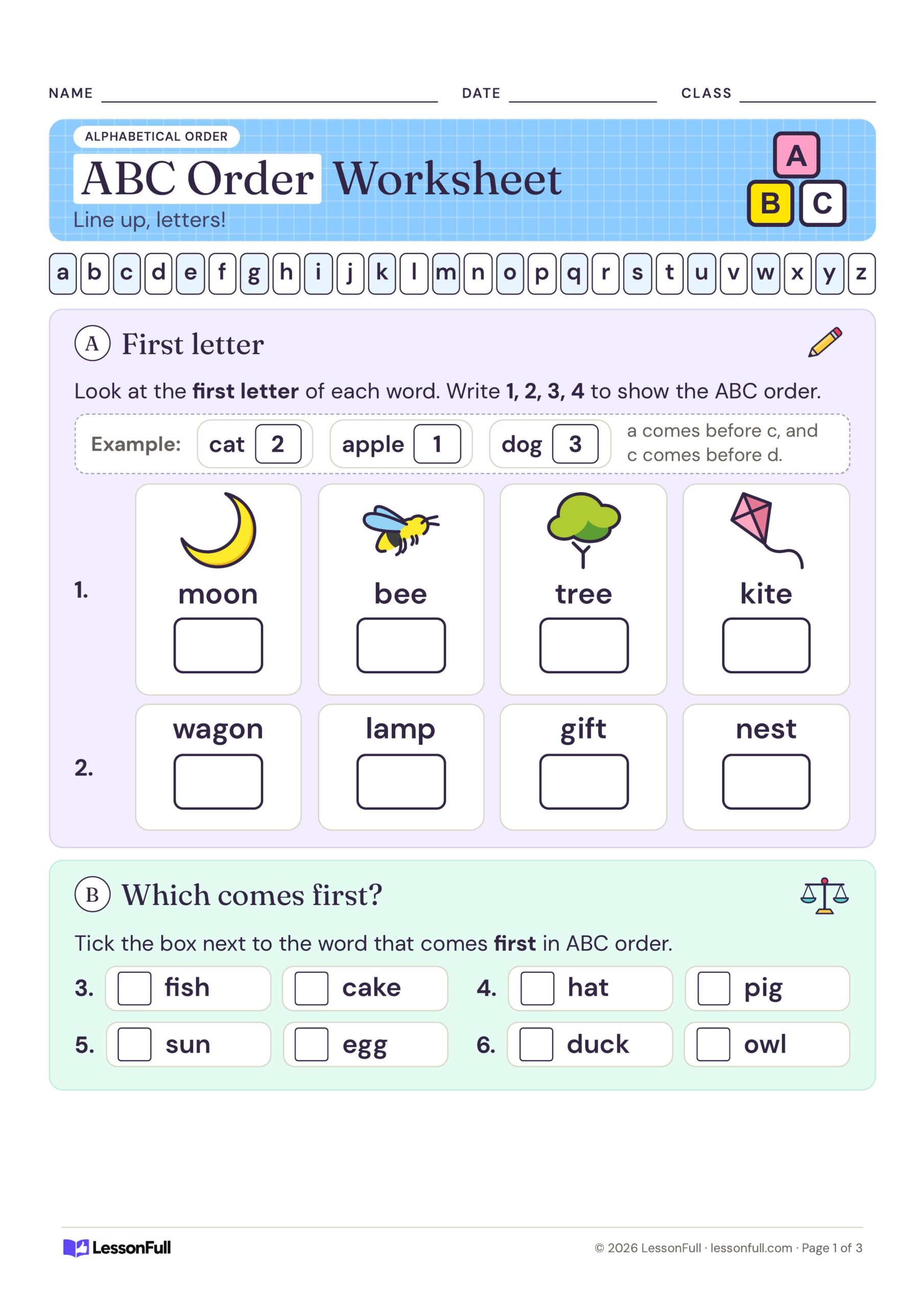
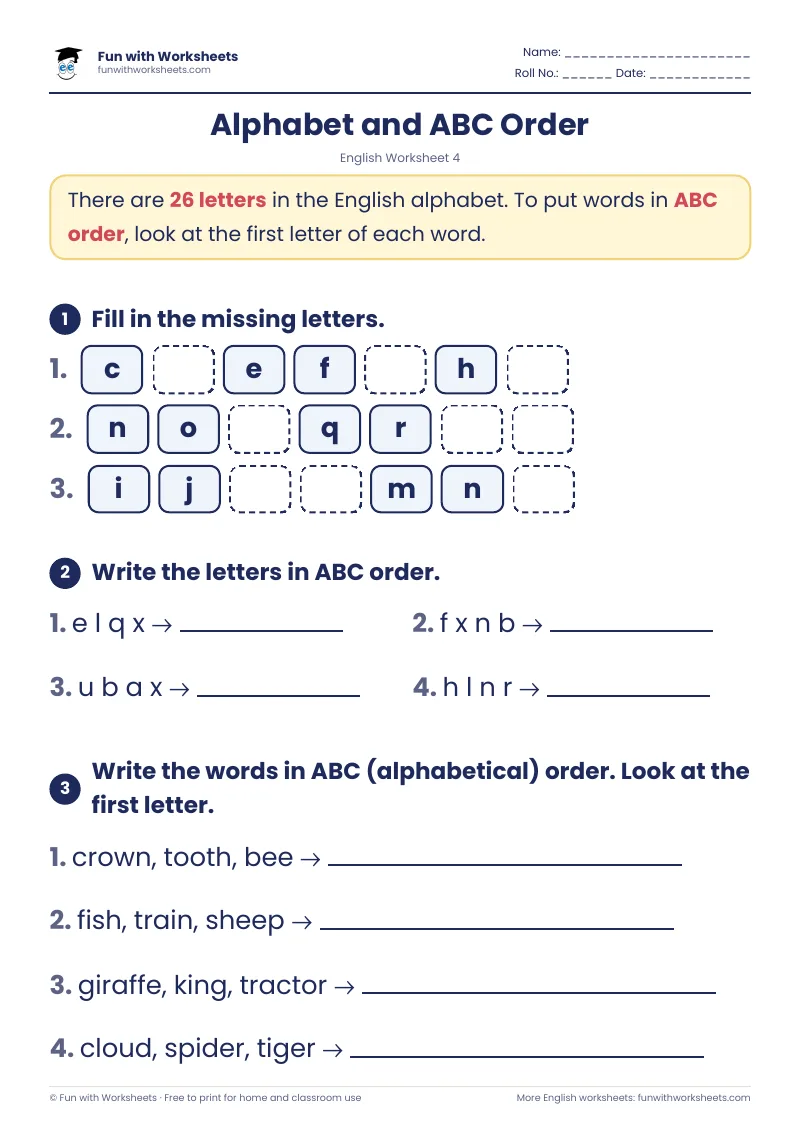
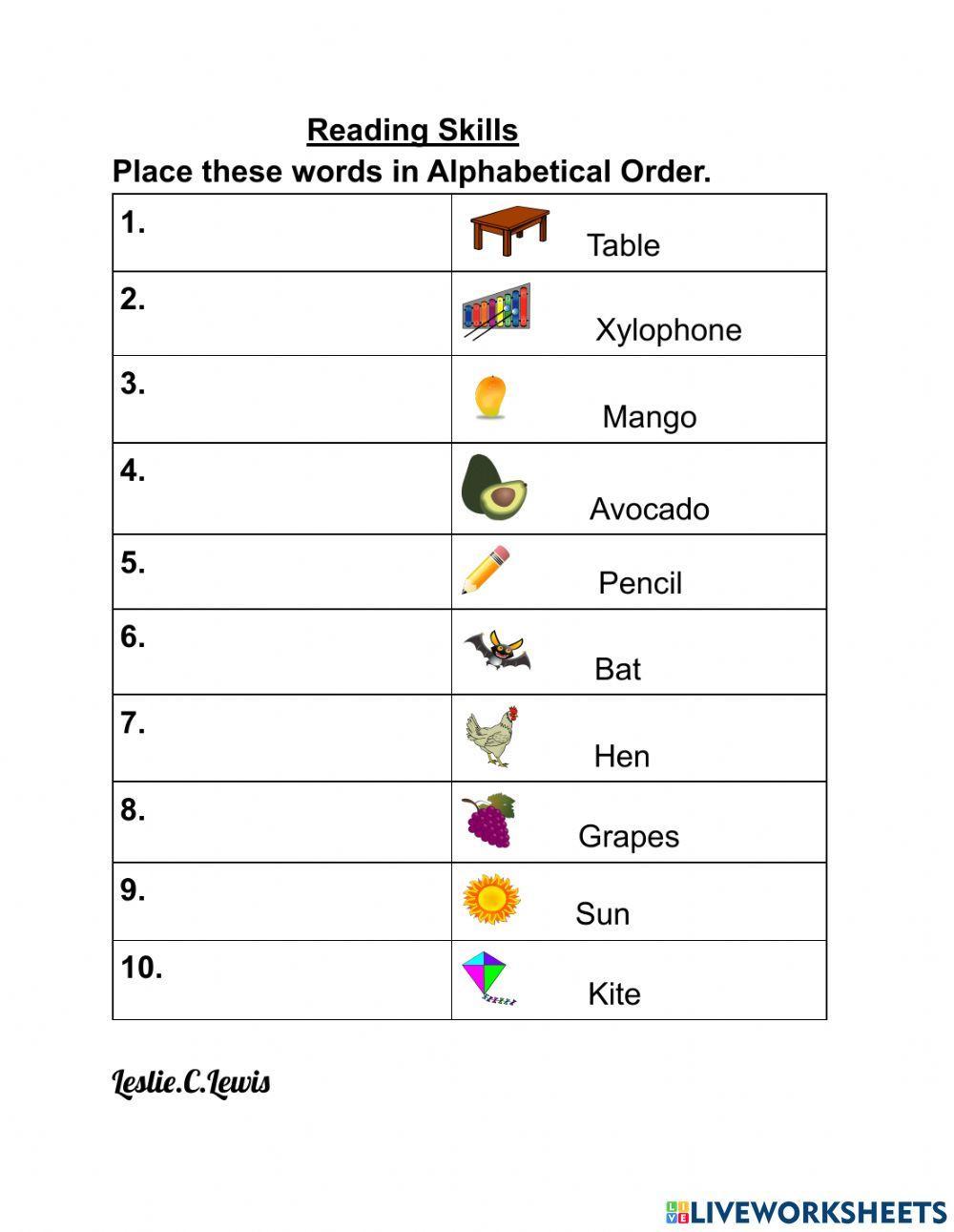
Teaching students how to arrange words or items in alphabetical order is a fundamental skill that lays the groundwork for effective reading and writing. The Arranging In Alphabetical Order Worksheet serves as a practical resource for educators looking to engage their students in this essential task. This worksheet not only helps students practice alphabetical sorting but also encourages independent learning, making it suitable for classroom, homeschool, or at-home use.
Understanding the Importance of Alphabetical Order
Alphabetical order is a basic organizational skill that students will use throughout their academic careers. It helps them in various subjects, from language arts to social studies, where they might need to locate information quickly. Teaching this skill effectively can boost their confidence in handling texts, dictionaries, and even their own writing.
This worksheet is particularly useful for students in grades 1 through 3, as they are typically developing their reading and writing skills during this period. By practicing with an Arranging In Alphabetical Order Worksheet, students can learn to recognize the sequence of letters and understand how to apply this knowledge in real-world scenarios.
How to Use the Arranging In Alphabetical Order Worksheet
To get the most out of the Arranging In Alphabetical Order Worksheet, follow these steps:
- Download the Worksheet: First, find a reliable source to download the worksheet. Ensure it’s in a printable format, typically PDF, to avoid reformatting issues.
- Print the Worksheet: Use standard letter-sized paper (8.5 x 11 inches) for printing. A portrait layout usually works well for most home printers. If you plan to laminate the worksheet for repeated use, consider printing on cardstock for durability.
- Review the Instructions: Before giving the worksheet to your students, read through the instructions yourself. This way, you can clearly explain what is expected of them. The worksheet typically includes lists of words that students will need to arrange in alphabetical order.
- Set Up a Quiet Workspace: Create a distraction-free environment for students to work on their worksheets. This could be at their desks in the classroom or a quiet spot at home.
- Encourage Independent Practice: Allow students to work through the worksheet on their own. This promotes independent learning and helps them develop critical thinking skills as they figure out the correct order of the words.
Tips for Effective Use of the Worksheet
To maximize the impact of the Arranging In Alphabetical Order Worksheet, consider these practical tips:
- Model the Process: Before handing out the worksheet, model how to arrange words alphabetically. Use a whiteboard or digital display to work through a few examples together as a class.
- Use Real-World Examples: Incorporate real-life items that students can relate to, such as their favorite animals, toys, or foods. This makes the activity more engaging and relevant.
- Incorporate Group Work: For a collaborative approach, have students work in pairs or small groups. They can discuss the order of the words and help each other understand the sorting process.
- Provide Feedback: After students complete the worksheet, take time to review their answers collectively. This feedback can reinforce learning and clarify any misunderstandings.
- Revisit and Reinforce: Revisit the concept of alphabetical order regularly. You can use different worksheets or integrate it into other subjects, like organizing a list of historical figures or vocabulary words.
Additional Resources for Teaching Alphabetical Order
While the Arranging In Alphabetical Order Worksheet is an excellent tool, consider supplementing it with these additional resources:
- Flashcards: Create flashcards with words that students can practice sorting. This can be a fun, interactive way to reinforce their learning.
- Alphabet Games: Incorporate games that involve alphabetical order. For example, use a scavenger hunt where students need to find items in alphabetical order.
- Online Activities: Utilize educational websites that offer interactive games and quizzes focused on alphabetical sorting. This can provide a different medium for students to engage with the material.
- Coloring Pages: Use coloring pages that incorporate letters and words. This can be a fun way for younger students to become familiar with the alphabet while also practicing their sorting skills.