
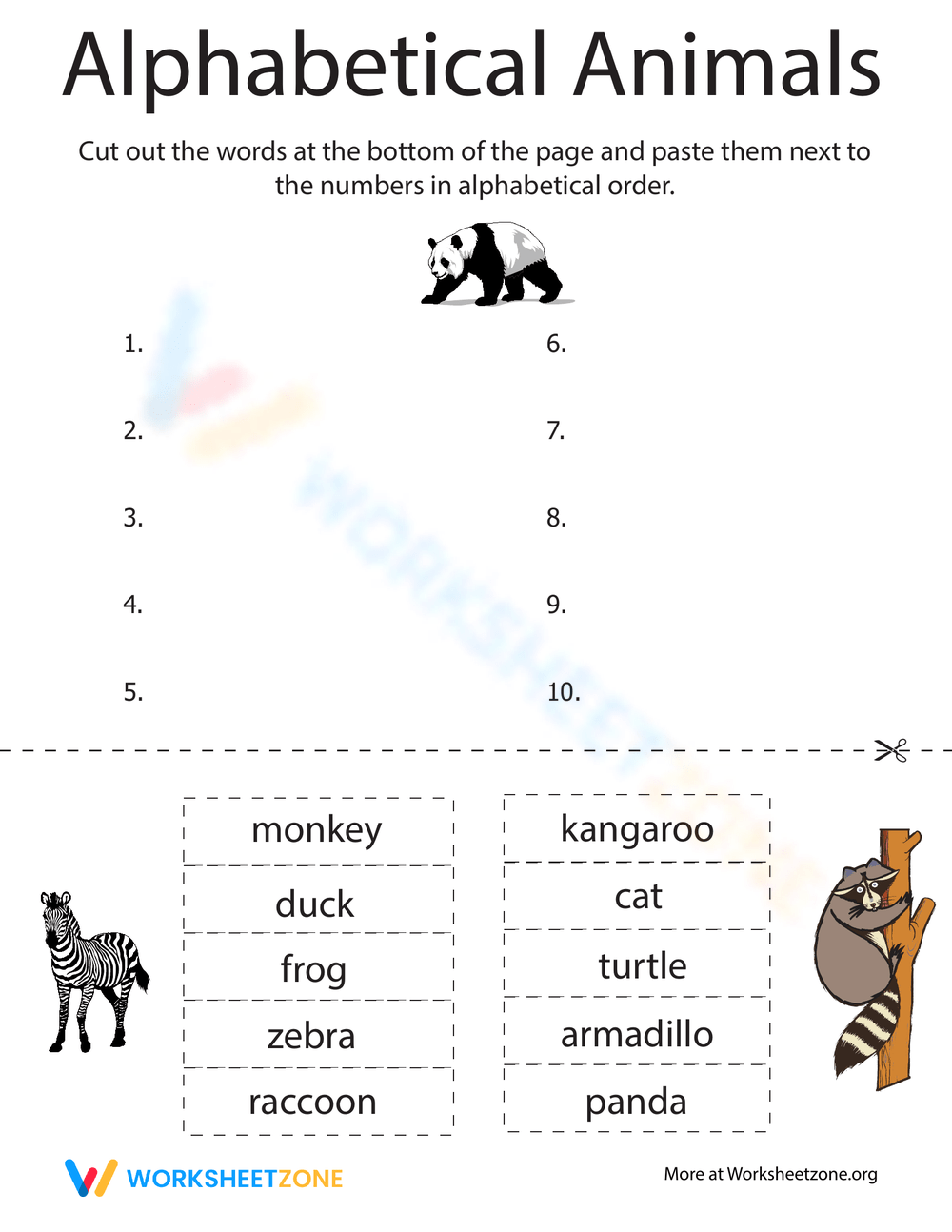
In a bustling classroom, Ms. Johnson sets up for the day as her first graders file in, eager to learn. Today, they will be working with an Animals In Alphabetical Order Worksheet, a resource designed to enhance their understanding of alphabetical order while expanding their vocabulary with animal names. This engaging worksheet not only helps students practice their alphabet skills but also introduces them to a variety of animals they may not have encountered before. Let’s explore how you can utilize this worksheet effectively in your teaching.
Understanding the Importance of Alphabetical Order
Alphabetical order is a foundational skill in reading and writing. It helps children organize information, locate words in dictionaries, and understand how words are categorized. Teaching this skill using an Animals In Alphabetical Order Worksheet can be both fun and educational. Children learn to recognize the sequence of letters, which reinforces their phonetic awareness and spelling abilities.
This worksheet is suitable for early elementary students, typically in kindergarten to second grade. By using this resource, teachers can create a structured approach to learning that encourages repeated practice throughout the week.
How to Use the Animals In Alphabetical Order Worksheet
To maximize the benefits of the Animals In Alphabetical Order Worksheet, consider implementing it in a few different ways throughout the week. Here’s a practical plan:
- Introduction (Day 1): Start by introducing the concept of alphabetical order. Use a few animal flashcards to demonstrate how words are arranged from A to Z. Then, hand out the worksheet and explain the activity, which typically involves children filling in animal names in the correct order.
- Guided Practice (Day 2): Gather your students in small groups to work on the worksheet together. This collaborative approach encourages discussion about the animals and helps students assist each other in understanding the order. While they work, circulate around the room to provide guidance and support.
- Independent Practice (Day 3): After the group activity, allow students to complete the worksheet independently. This gives them a chance to practice the skill on their own, reinforcing what they learned during guided practice.
- Review and Reinforcement (Days 4-5): In the following days, revisit the worksheet. You can turn it into a game by asking students to race against the clock to list as many animals as they can in alphabetical order. This makes the learning process more engaging and allows for repetition, which is crucial for skill retention.
Tips for Effective Use of the Worksheet
To get the most out of the Animals In Alphabetical Order Worksheet, keep these tips in mind:
- Print on Cardstock: For durability, print the worksheets on cardstock instead of regular paper. This way, you can reuse them for future classes without worrying about wear and tear.
- Incorporate Art: After completing the worksheet, encourage students to draw their favorite animal from the list. This not only reinforces their learning but also adds a creative element to the activity.
- Use Visual Aids: Display posters of the alphabet and animal pictures around the classroom. This visual reinforcement helps students connect the worksheet activity with real-world examples.
- Adjust Difficulty: For advanced students, consider adding a challenge by asking them to write sentences using the animals from the worksheet. For younger or struggling students, you might provide a word bank to assist them as they complete the activity.
Engaging Activities Beyond the Worksheet
While the Animals In Alphabetical Order Worksheet is a fantastic tool, you can further enhance learning with additional activities. Here are a couple of ideas:
- Alphabet Animal Hunt: Organize a scavenger hunt where students find pictures of animals around the classroom or school that start with each letter of the alphabet. They can then share their findings and practice saying the names in order.
- Story Time: Incorporate storybooks featuring animals. After reading, have students identify the animals mentioned in the book and list them in alphabetical order. This reinforces their understanding in a narrative context, making it more memorable.
Assessing Understanding
To evaluate how well your students grasp the concept of alphabetical order, consider these assessment techniques:
- Quick Quizzes: After using the worksheet, give a short quiz where students must list animals in alphabetical order from memory. This can be done as a group or individually.
- Peer Teaching: Pair students and have them explain the concept of alphabetical order to each other. Teaching is a great way to deepen understanding, and students often learn well from their peers.
- Reflection: Encourage students to reflect on what they learned by writing a few sentences about their favorite animal and why it is important to know its name.
Using the Animals In Alphabetical Order Worksheet can provide a structured yet fun approach to mastering alphabetical order. The key is to create a routine that incorporates different activities throughout the week, allowing for reinforcement and engagement. With the right strategies, you can help students develop essential skills while fostering a love for learning about animals and language.
Next time you’re planning your lessons, think about how this worksheet can fit into your curriculum. Whether it’s through collaborative practice, creative assignments, or engaging activities, the possibilities for teaching alphabetical order with animals are endless.