
The New Deal Programs Alphabet Soup Worksheet offers a unique approach to understanding the various programs initiated during the Great Depression. Unlike traditional worksheets, this resource combines historical learning with creativity, making it an engaging tool for teachers and students alike. It provides an excellent way for students to explore significant New Deal initiatives while enhancing their critical thinking and comprehension skills.
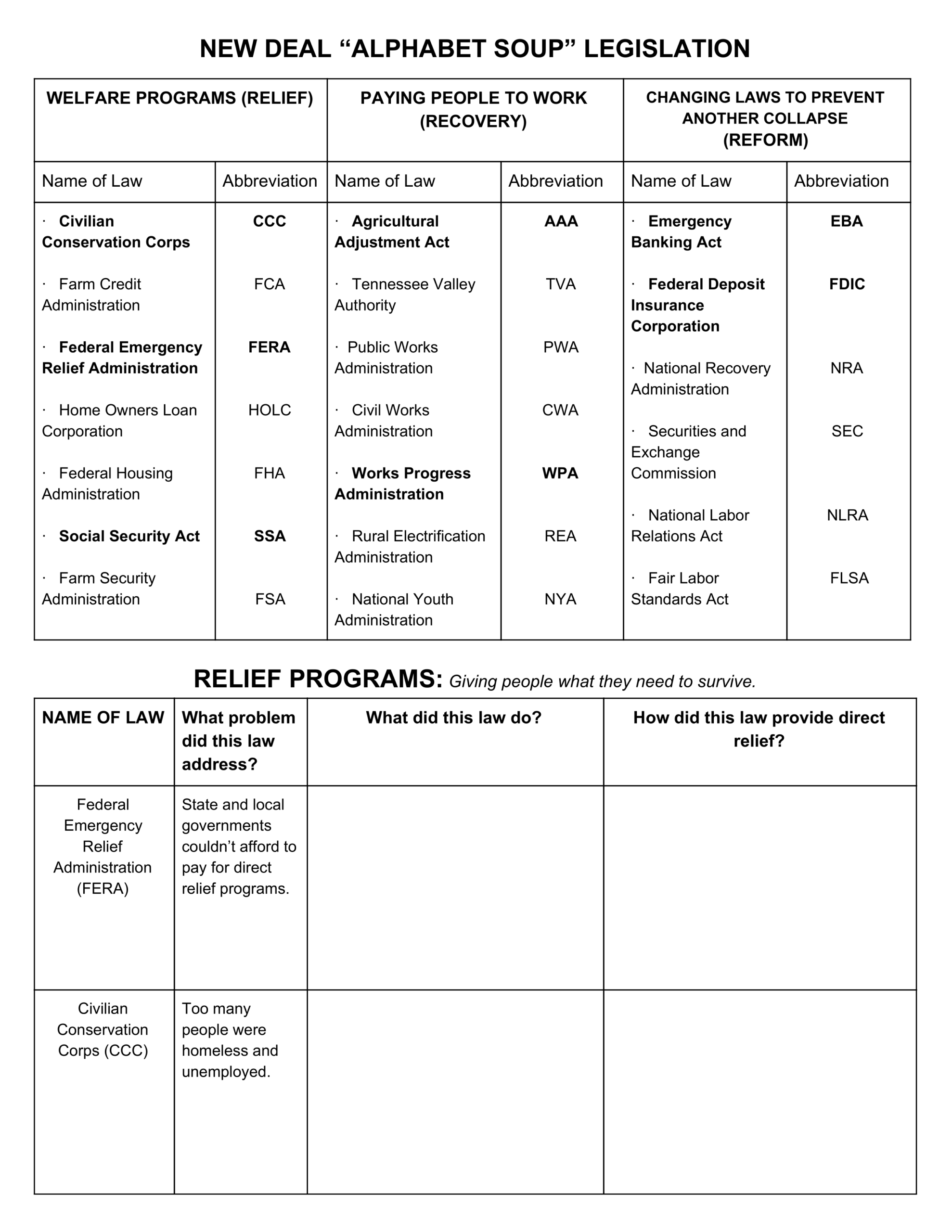
Understanding the Layout of the Worksheet
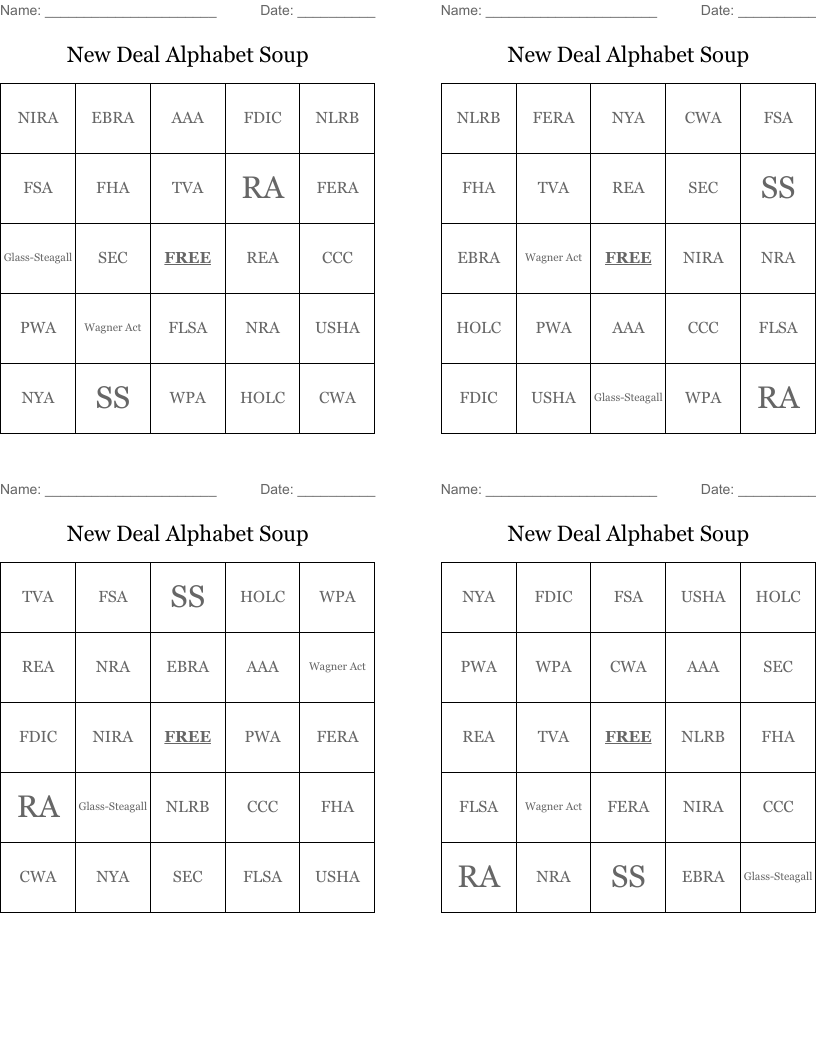
The New Deal Programs Alphabet Soup Worksheet is designed to be both visually appealing and educationally effective. The worksheet typically features a colorful layout, which helps draw students’ attention. Each section is clearly labeled, guiding students through the different parts of the activity.
At the top, you’ll find a brief introduction outlining the purpose of the worksheet. This section is crucial, as it sets the tone for the activity and gives students context about what they will be learning. Following that, there are sections dedicated to individual programs, often organized alphabetically, allowing students to easily navigate through the material.
How to Use the Worksheet in the Classroom
This worksheet is ideal for middle school students, generally around grades 6-8, but can also be adapted for younger or older students depending on their skill levels. Here’s how you can effectively implement the New Deal Programs Alphabet Soup Worksheet in your classroom:
- Introduce the Topic: Begin with a brief lecture or discussion about the Great Depression and the significance of the New Deal. This context is important for students to grasp the relevance of the worksheet.
- Distribute the Worksheet: Provide each student with a printed copy of the worksheet. Portrait layout is often more convenient for home printers, ensuring that all elements fit well on the page.
- Group Activity: Consider breaking the class into small groups. Each group can focus on researching one or two specific New Deal programs. This collaborative approach encourages discussion and deeper understanding.
- Complete the Worksheet: As students work on the worksheet, they will fill in the blanks related to the various programs, such as their names, purposes, and outcomes. This reinforces their learning and helps retain information.
- Review and Discuss: After completing the worksheet, hold a class discussion to review the answers. This not only allows students to share their findings but also opens the floor for questions and further exploration of the topic.
Grading and Reviewing Student Work
When it comes to grading the New Deal Programs Alphabet Soup Worksheet, a clear rubric can simplify the process. Focus on the following elements:
- Accuracy of Information: Check that students correctly identify the programs and their respective details. This is crucial for confirming their understanding of the material.
- Creativity and Engagement: Since the worksheet allows for some creative input, consider how students express their understanding. Are they making connections between the programs and their impacts?
- Participation in Group Work: If used in a group setting, assess how well students collaborated. Peer evaluations can be a helpful tool here.
Reviewing the answers can be done collectively, where you go through the worksheet as a class. This not only reinforces learning but also allows students to correct any misunderstandings in real-time.
Adapting the Worksheet for Different Learning Environments
The New Deal Programs Alphabet Soup Worksheet is versatile and can be adapted for various learning environments, whether in traditional classrooms, homeschools, or even remote learning situations. Here are a few tips:
- Homeschooling: Parents can easily use the worksheet as part of a history curriculum. It offers a structured way to engage with the material without requiring extensive teacher resources.
- Remote Learning: If you’re teaching online, consider having students fill out the worksheet digitally. You can use platforms that allow for PDF annotation, so students can type directly on the worksheet.
- Differentiated Instruction: For students who may struggle with reading or writing, consider pairing them with a peer or providing additional resources, such as videos or articles about the New Deal, to support their learning.
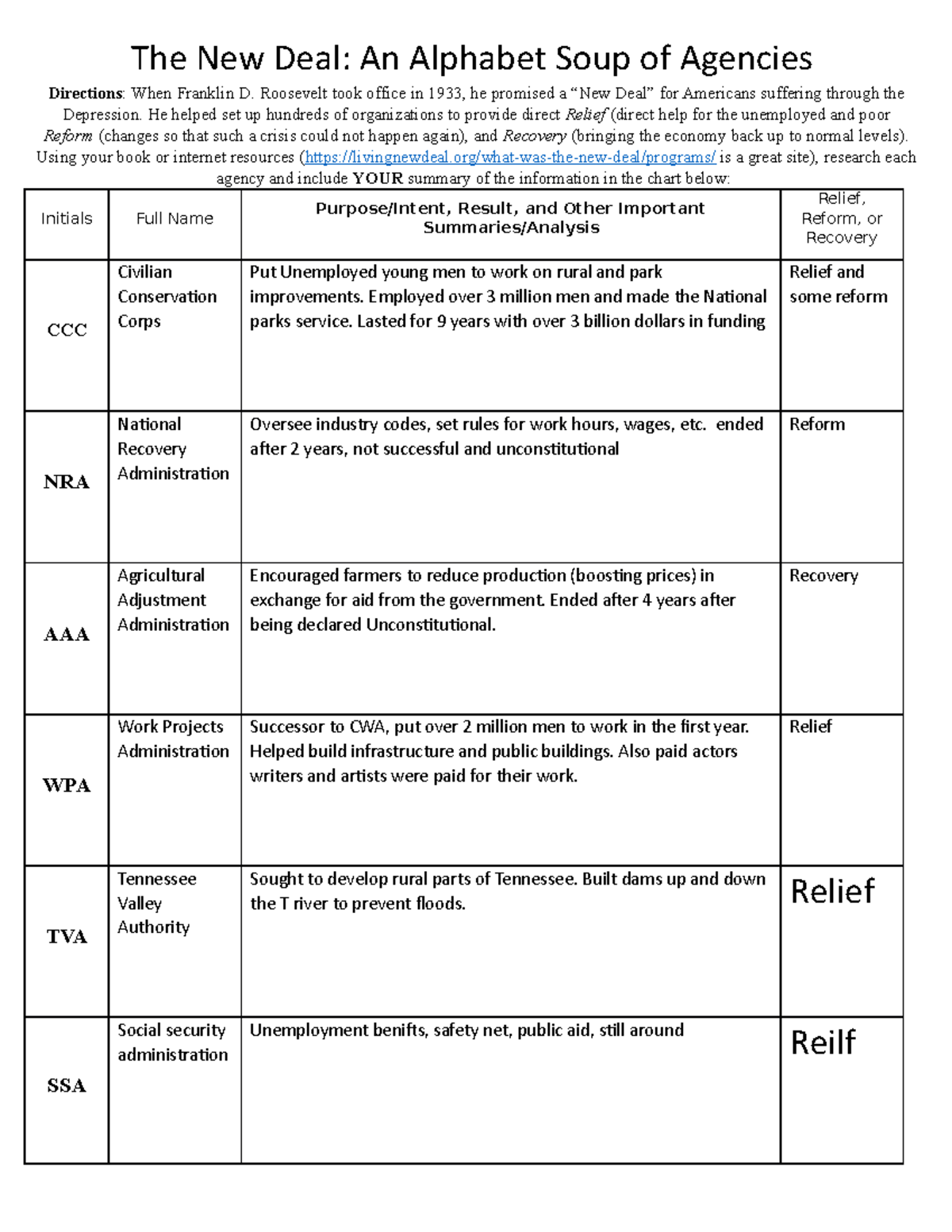
Additional Resources and Activities
To enhance the learning experience, consider supplementing the New Deal Programs Alphabet Soup Worksheet with additional resources. Here are some suggestions:
- Interactive Activities: Create a timeline of the New Deal programs, allowing students to visualize the sequence of events. This can be done on poster boards or digitally.
- Documentary Viewing: Show a documentary or video clips about the Great Depression and the New Deal. Discussing these materials can help reinforce the concepts covered in the worksheet.
- Field Trips: If possible, arrange a visit to a local history museum that may have exhibits on the Great Depression. Real-world connections can deepen students’ understanding and interest.
The New Deal Programs Alphabet Soup Worksheet not only serves as a practical teaching tool but also encourages students to engage with history in a meaningful way. One particularly useful detail to note is that this worksheet can be easily customized to fit your specific curriculum needs, allowing for flexibility in teaching styles and student learning preferences.