
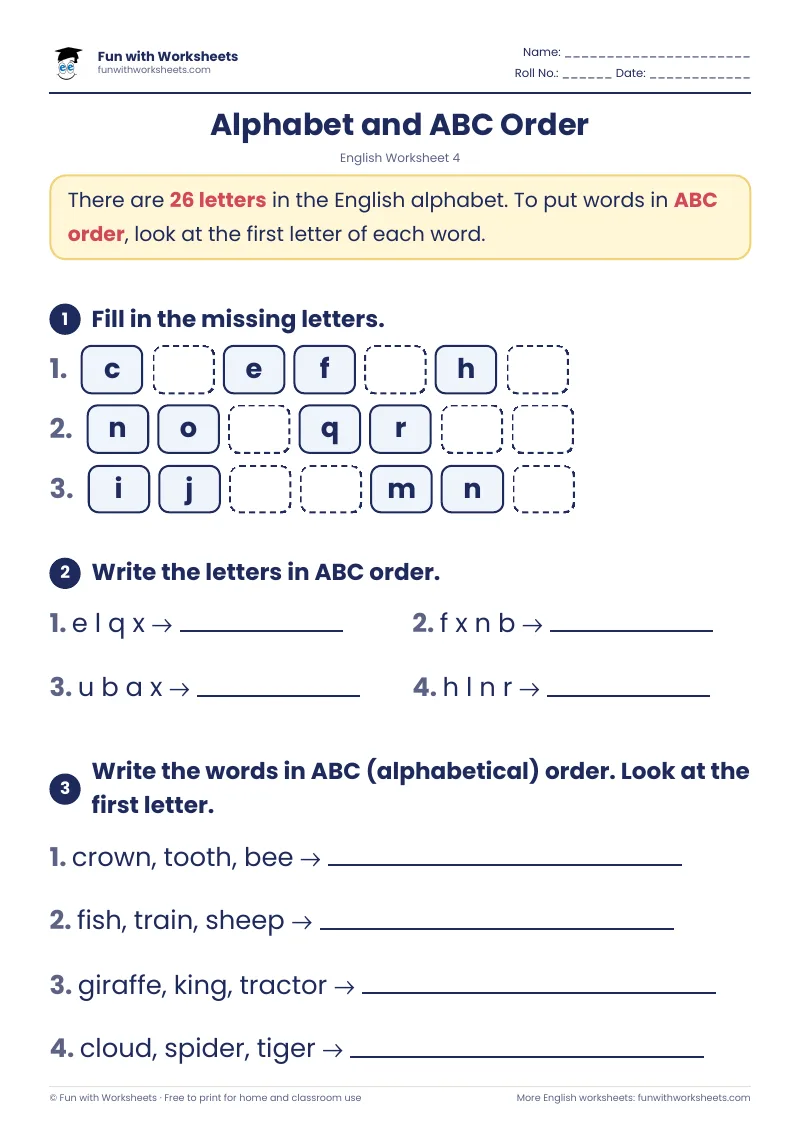
Free Alphabetical Order Worksheets Ks1 are valuable resources for teachers and parents aiming to enhance children’s literacy skills. These worksheets not only support the understanding of alphabetical order but also engage young learners in a fun and interactive way. explore how to effectively use these worksheets in various educational settings, including classrooms and at home.
Understanding the Importance of Alphabetical Order
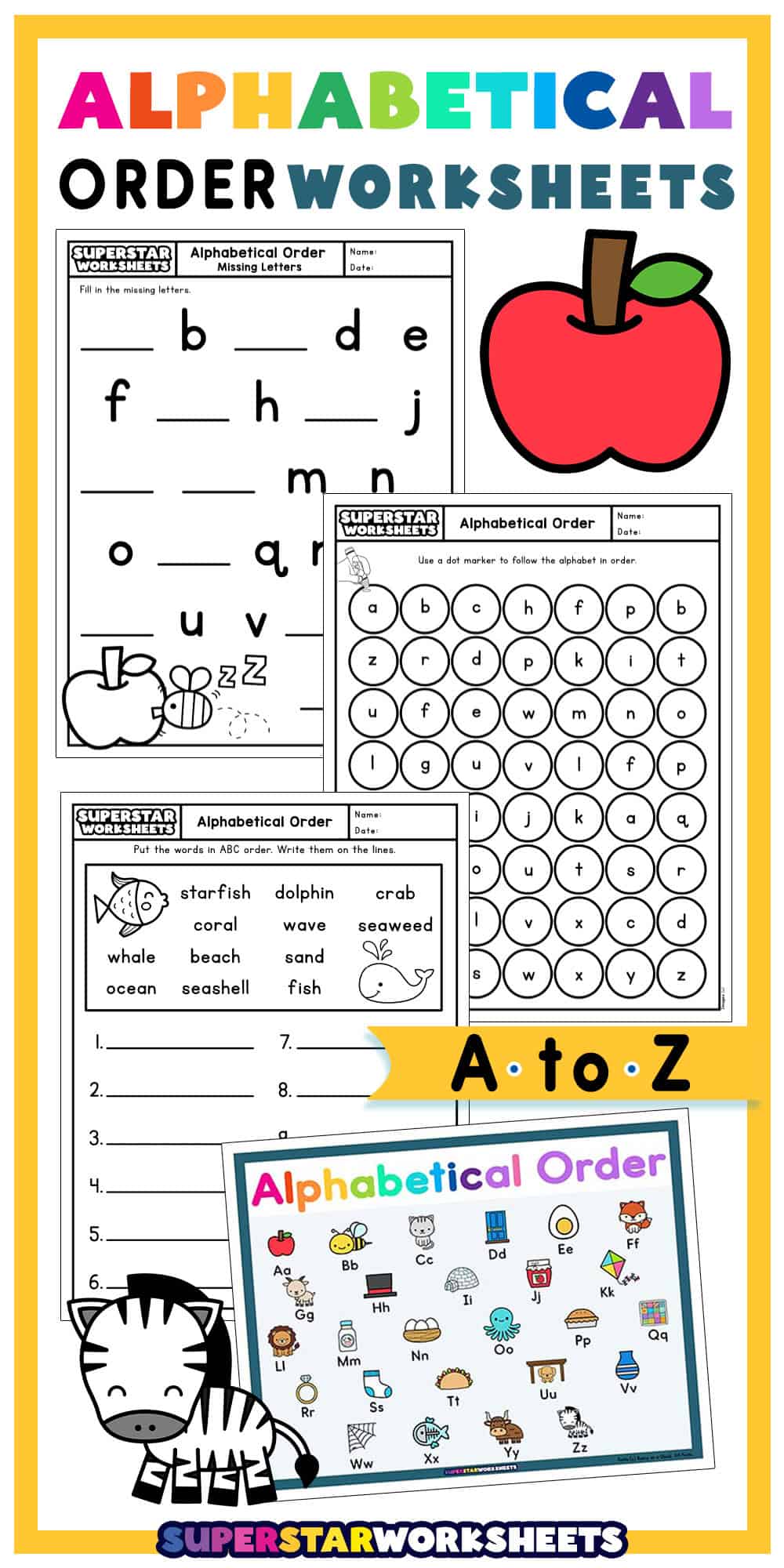
Alphabetical order is a foundational skill that helps children organize information and develop sorting abilities. Recognizing the sequence of letters lays the groundwork for effective reading and writing. When children learn to arrange words alphabetically, they gain confidence in navigating dictionaries, encyclopedias, and other reference materials. This skill is particularly relevant for Key Stage 1 (KS1) students, typically aged 5 to 7 years, who are beginning to explore literacy independently.
How to Use Free Alphabetical Order Worksheets Ks1
Integrating Free Alphabetical Order Worksheets Ks1 into educational routines can be straightforward and effective. Here are some practical ways to implement these worksheets:
- Classroom Activities: Teachers can print multiple copies of worksheets for group activities. Divide the class into small groups and assign each group a set of words to arrange. This encourages teamwork and collaboration while promoting learning through peer interaction.
- Individual Practice: For independent work, provide each student with a worksheet to complete at their own pace. This can be particularly useful for assessing individual understanding of the concept. Consider pairing worksheets with a short review session to reinforce learning.
- Home Learning: Parents can use these worksheets as part of homework assignments. They provide a structured way for children to practice skills learned in class. Encourage parents to review the completed worksheets together, discussing any challenges or questions.
- Reinforcement Through Games: To make learning more engaging, incorporate the worksheets into games. For example, create a “race” to see who can complete the worksheet the fastest, or have a “quiz” where students must come up with words that fit within certain alphabetical categories.
Features of Quality Alphabetical Order Worksheets
When selecting Free Alphabetical Order Worksheets Ks1, it is essential to consider several features that enhance their effectiveness:
- Clear Instructions: Worksheets should have straightforward instructions that are easy for young learners to understand. This ensures that students can focus on the task without confusion.
- Visual Appeal: Worksheets that include colorful graphics and engaging layouts can capture children’s attention, making the learning process more enjoyable.
- Variety of Activities: Look for worksheets that offer different types of activities, such as filling in blanks, matching words, or sorting letters. This variety can cater to different learning styles and keep students motivated.
- Answer Key Availability: An answer key is a useful tool for teachers and parents to quickly check work. It aids in providing immediate feedback, which is crucial for learning.
Tips for Printing and Distributing Worksheets
Efficient printing and distribution are key when using Free Alphabetical Order Worksheets Ks1 in a classroom setting. Here are some practical tips:
- Paper Quality: For worksheets that will be frequently handled, consider using cardstock. It’s more durable than standard paper and can withstand repeated use. If lamination is an option, it can further extend the life of the worksheets.
- Print Settings: Use a portrait layout for most home printers, as this is the standard and typically requires less ink. Ensure that the printer settings are adjusted to print in high quality to maintain the clarity of any visuals included.
- Bulk Printing: For classroom use, print a bulk quantity to save time. This allows for quick distribution and ensures every student has the resources they need without delay.
Incorporating Feedback and Assessment
Using Free Alphabetical Order Worksheets Ks1 can also facilitate feedback and assessment in both classroom and home settings. Here’s how:
- Peer Review: Encourage students to exchange worksheets with classmates for peer review. This not only helps them learn from one another but also fosters a sense of community within the classroom.
- Progress Tracking: Keep a record of completed worksheets to track each student’s progress over time. This can help identify areas where additional support may be needed.
- Parent Communication: For homework assignments, parents can provide feedback on how their child performed. This insight can be valuable for teachers when planning future lessons.
Engaging Extensions Beyond Worksheets
While worksheets are a fantastic tool, consider incorporating additional activities to reinforce alphabetical order skills:
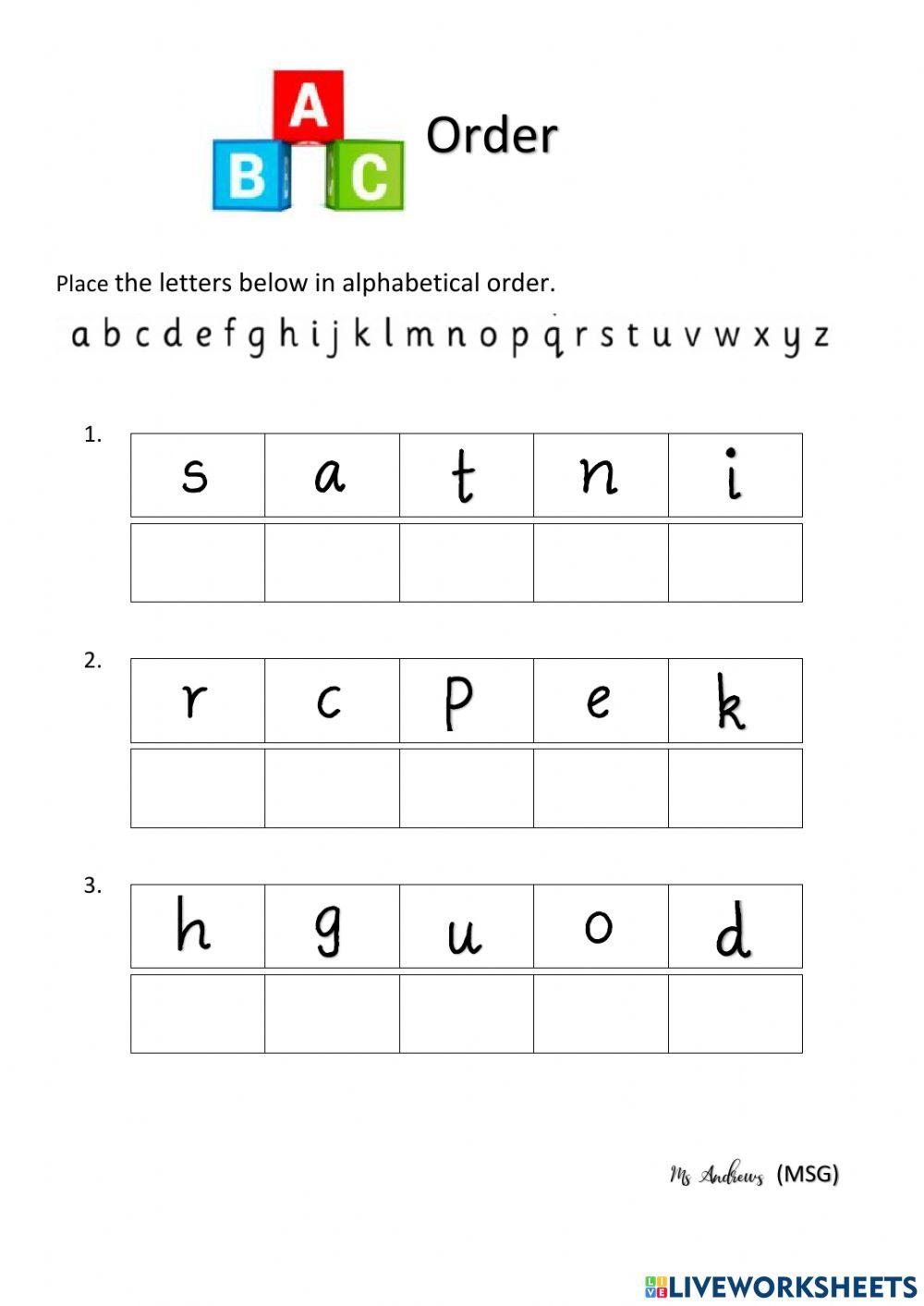
- Alphabet Games: Utilize games like “Alphabet Bingo” or “Word Scavenger Hunts,” where children can search for items that start with each letter of the alphabet.
- Story Time: Read books that emphasize alphabetical order and encourage students to identify words in the story that fit into the order. This reinforces the concept in a fun, narrative context.
- Creative Projects: Have students create their own alphabetical books, where each page features a letter and corresponding words or images. This hands-on project enhances creativity while solidifying their understanding of the topic.
Using Free Alphabetical Order Worksheets Ks1 effectively can significantly benefit young learners in developing essential literacy skills. By combining these worksheets with engaging activities, teachers and parents can create a rich learning environment that fosters curiosity and enthusiasm for reading and writing. For immediate implementation, print a selection of worksheets today and explore the diverse ways to support children’s learning journeys.